

Firefly Conservancy
A Beginner’s Guide to Firefly Observation
Apr
Fascinated by fireflies but unsure how to approach them? Between memorizing scientific names, interpreting flash patterns, and learning insect anatomy, fireflies can be an overwhelming subject for a beginner! Fear not. Read on for essential tips on equipment, what to look for, and how to stay safe.
First, scout the habitat during the day.
Whether you are in your neighbourhood or at a campsite, familiarise yourself with the area while it is still light out. It is a decision you will not regret. Identify promising spots, such as field edges, wetlands, or shaded forests. Take note of the trail layout, roads, and traffic. Crucially, look out for potential daytime hazards, such as poison ivy, thorny brambles, or steep drop-offs.
Use a voice recorder for field notes.
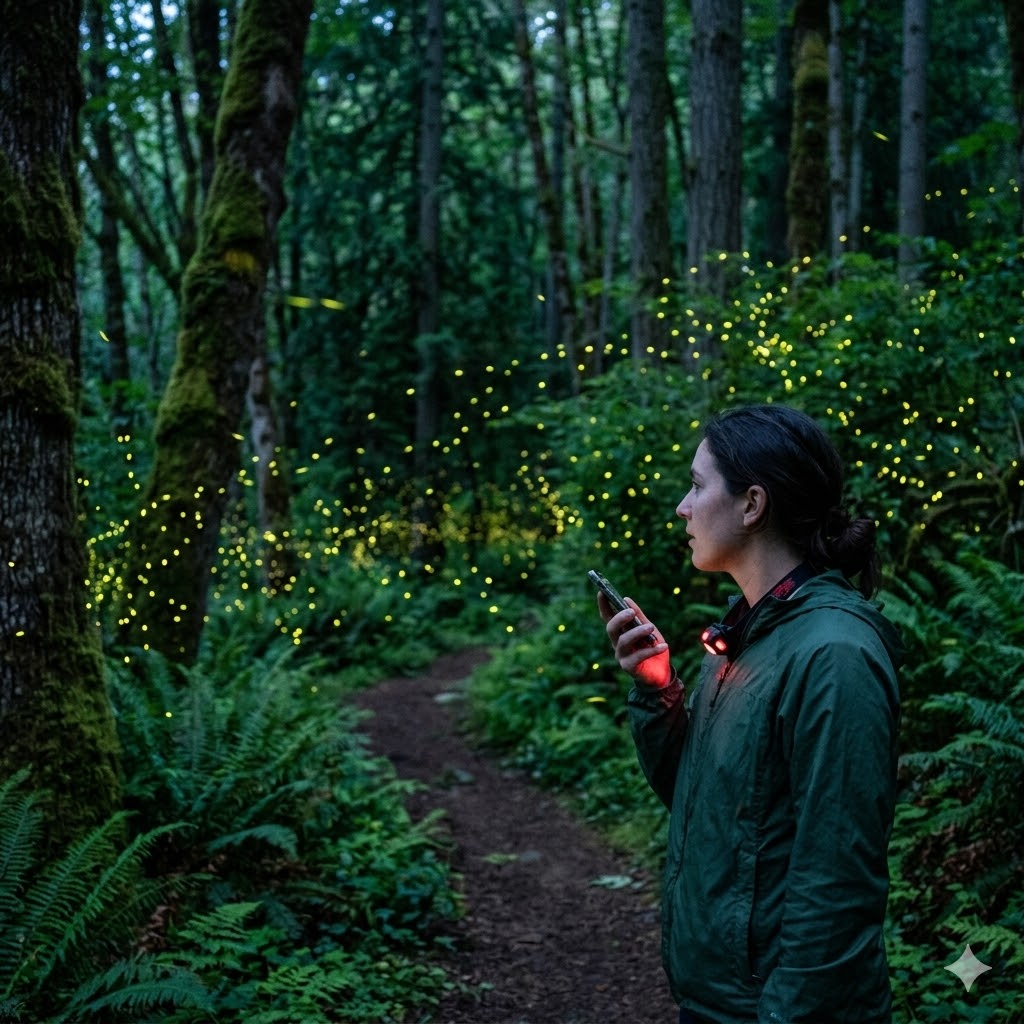
Utilizing a dedicated device or the voice recorder on your phone allows you to describe what you see without fumbling with pen and paper in the dark. It also ensures you keep your eyes on the fireflies rather than your notepad. Make it a habit to state the time, date, and location at the beginning of each recording.
Note the temperature.
Air temperature directly influences firefly activity patterns and flash rates, so it is important to track local conditions. Carry a thermometer with you, or check the nearest online weather station.
Be thoughtful with lighting.
Always use a red-filtered headlamp or flashlight, and keep it turned off as much as possible to avoid disturbing the insects.
Remember to pause and enjoy.
While collecting data for documentation and identification is important, it should never feel like a chore. If it becomes stressful, pause and simply soak in the magical wonder of the flashing fireflies.