
Nursery
The Living Lantern Lab
May
The Living Lantern Lab: Plants to Power Your Firefly Sanctuary
At River & Lily, we don’t just grow plants; we grow ecosystems. If you want to see the Magaliesberg twilight come alive with fireflies, you have to stop thinking like a gardener and start thinking like a habitat architect. Fireflies are not visitors to your garden—they are products of it.
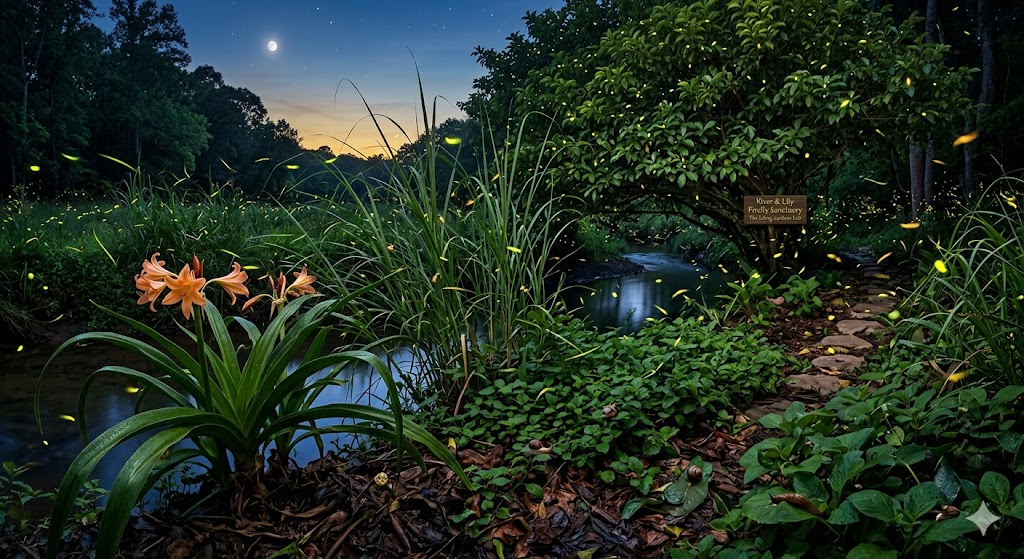
To have a “flash,” you need a “hunt.” To have a hunt, you need the specialized indigenous flora that supports the moisture, the prey, and the privacy these beetles demand. Here is the curated selection from our nursery to help you build a sanctuary for the “Timekeepers of the Evening.”
1. The Anchors of Moisture: Orange River Lilies (Crinum bulbispermum)
The name says it all. These iconic bulbs are the biological cornerstone of a firefly habitat in the Magaliesberg.
-
The Firefly Connection: Fireflies thrive where the earth stays damp. Crinum lilies love “wet feet” and are perfectly suited for the riparian edges of our creek or low-lying garden spots.
-
The Microclimate: Their large, arching leaves create deep, humid shadows at the base of the plant—the exact environment required for firefly larvae (glow-worms) to stay hydrated during the heat of the day.
2. The Hunter’s Haven: Wild Ginger and Plectranthus
To attract fireflies, you must first attract their food: snails and slugs.
-
Groundcover Strategy: Thick, leafy ground-covers like Cape Stock-Rose or various Plectranthus species create a carpet of organic “litter”.
-
The Feast: These plants provide the cool, damp shelter that terrestrial mollusks love. By planting these, you are essentially setting the dinner table for the predatory firefly larvae.
3. The Vertical Stage: Tall Grasses and Ferns
Adult fireflies need a “launchpad” for their mating flight and a place for females to anchor their steady glow.
-
Native Grasses: Species like Miscanthus capensis (Doringriviergrass) provide long, stable stems. Males use these to take flight, while females often climb to the tips to broadcast their signals to the canopy.
-
Ferns: Indigenous ferns, like the Knysna Fern, add a crucial layer of “middle-canopy” cover. They break up the wind and provide a textured surface for fireflies to rest on during the day.
4. The Broad-Leafed Canopy: Tree Fuchsia (Halleria lucida)
For the aerial acrobats, you need height and broad leaves.
-
The Screen: The Tree Fuchsia is a Magaliesberg favorite that provides a dense, leafy screen. Its broad leaves offer the perfect “hiding spots” for fireflies to cling to while they wait for the sun to drop.
-
Natural Lighting: A diverse canopy height ensures that different species—from those that hover near the grass to those that patrol the treetops—all have a home in your garden.
The Golden Rule of the Firefly Garden
While the plants provide the structure, your management provides the life.
-
Leave the Leaves: Do not “clean” your garden beds. That layer of fallen brown leaves is the nursery where glow-worms live and hunt.
-
Zero Chemicals: Fireflies are beetles; common garden pesticides will kill them and their food source instantly.
Visit the River & Lily Nursery. Let’s pick out the plants that will turn your garden into a theatre of light this summer.
References
de Wets Wild. (2019, May 01). River Lily. https://dewetswild.com/2019/05/01/river-lily/
Firefly.org. (n.d.). List of Native Plants Good for Fireflies. https://www.firefly.org/plants-for-fireflies
Mountain Herb Estate. (n.d.). ORANGE RIVER LILLY (Crinum bulbispermis). https://www.herbgarden.co.za/mountainherb/herbinfo.php?id=792
MyGardenLife. (2024, March 11). 6 Ways to Attract Fireflies to Your Yard. https://mygardenlife.com/what-to-grow/attract-fireflies-to-your-yard
National Wildlife Federation. (n.d.). Firefly-Friendly Gardening. https://www.nwf.org/Native-Plant-Habitats/Plant-Native/Habitat-Essentials/Firefly-Friendly-Gardening