

Firefly Conservancy
Chasing Starlight
Apr
Chasing Mountain Starlight: The Firefly Guide for River & Lily
Magaliesberg, South Africa
At River & Lily, tucked within the ancient folds of the Magaliesberg Mountains, summer brings a spectacle unlike any other. As the evening thunderstorms clear and the air remains thick with Highveld humidity, the “Timekeepers of the Evening” emerge.
Our local fireflies are a vital part of the Magaliesberg’s “micro-world,” thriving amongst endemic fynbos and the proteas that line our ridges. To help you experience this magic responsibly in 2026, here is our localised guide to the glow.
The Southern Summer Calendar: When to Visit
In South Africa, firefly activity is closely tied to our summer rainfall season. They need the warmth and moisture of the November rains to begin their display.
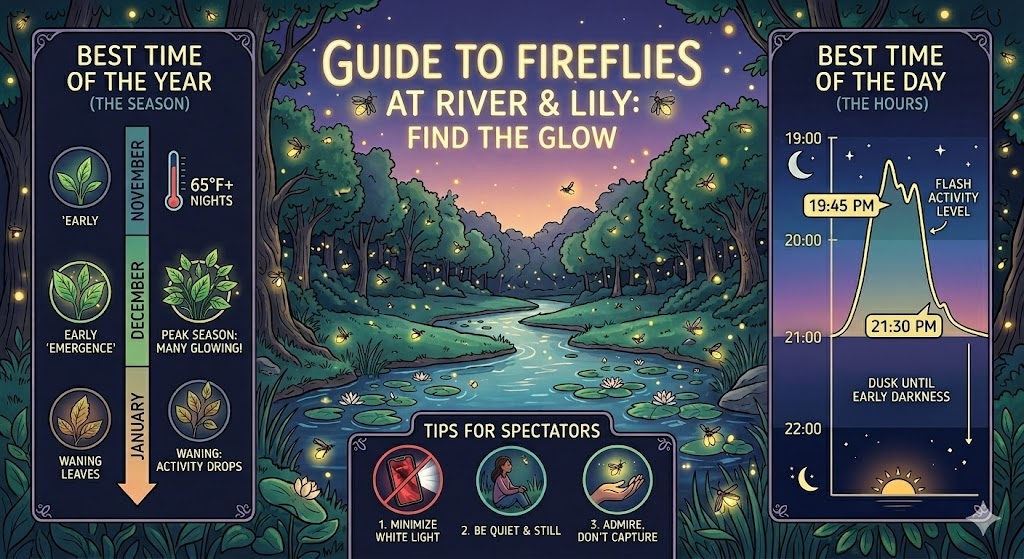
1. The Best Time of the Year
The window for firefly activity in the Magaliesburg region is relatively short but intense.
-
Early Emergence (November): As the first heavy summer rains arrive, the larvae begin their transformation.
-
Peak Season (December – January): This is the ultimate time for viewing. On warm, still nights after a afternoon thundershower, the conservancy is at its most magical.
-
Waning (February): As the season begins to turn, the displays become more sporadic and concentrated near the river banks.
2. The Best Time of Day
Because our summer days are long, the fireflies wait for the deep shadows of the mountain to fall before starting their dance.
-
The Golden Hour (18:30 – 19:30): Use this time to scout the trails and find a safe spot near the water or forest edge.
-
The Peak Display (19:45 – 21:00): This is when the synchronous flashing is most visible. By 21:30, most species have completed their mating rituals for the night.
Pro-Tips for the Magaliesberg Explorer
-
Mind the Terrain: The Magaliesberg can be rugged. Scout your path during the day to avoid thorny brambles or steep drops near the river.
-
Red Lights Only: White light (even from a smartphone) can disrupt firefly communication for minutes. Use a red-filtered headlamp and keep it off whenever possible.
-
Record the Moment: Use a voice recorder to document the time, temperature, and flash patterns. This helps our conservancy track population health without needing bright lights to write notes.
-
Awe over Anatomy: If identifying species feels stressful, just stop. Take a breath of that fresh mountain air and soak in the “ancient signals” of the natural world.